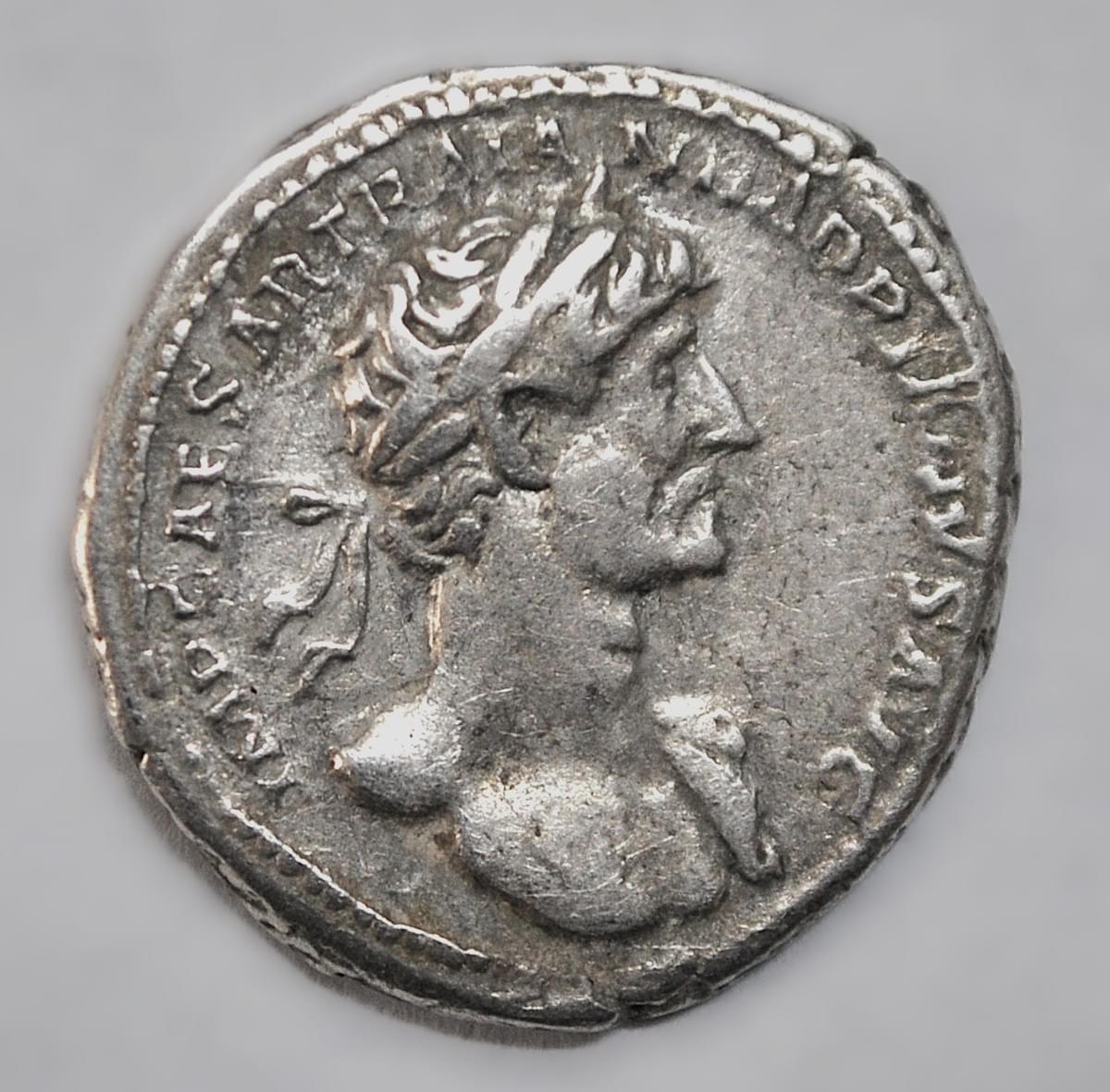
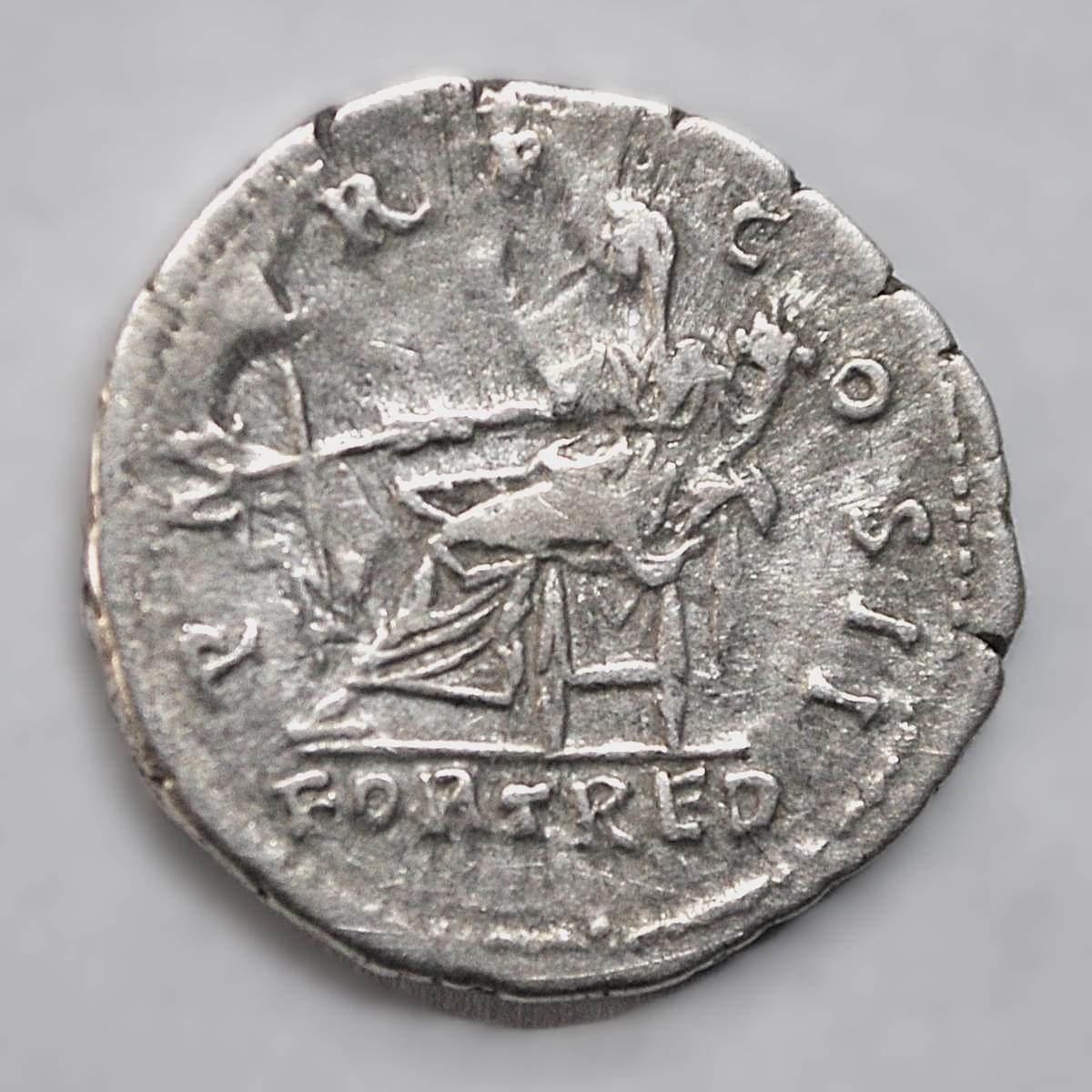
The featured item on our online store this week is an AR denarius struck c.118 CE during the reign of Roman Emperor Hadrian.
Hadrian (r. 117–138 CE) oversaw a critical transition in the Roman Principate, shifting the imperial mandate from territorial expansion to geopolitical stabilization. Upon his accession, Hadrian broke with the interventionist policies of his predecessor, Trajan, by withdrawing Roman forces from newly conquered territories in Mesopotamia to establish more defensible frontiers. This policy of disciplina and pax was physically
manifested in the construction of sophisticated limitary fortifications, most notably Hadrian’s Wall in Britannia and the Limes Germanicus. His governance was characterized by a peripatetic style; by spending the majority of his reign traversing the provinces rather than residing in Rome, he effectively decentralized imperial authority and integrated provincial elites into the Roman administrative fabric.
Intellectually, Hadrian’s reign represented the apex of the Second Sophistic, a period defined by a fervent revival of Greek linguistic and cultural traditions. As a devoted Philhellene, he sought to position Athens as the cultural capital of the Empire, completing the Olympeion and establishing the Panhellenion to unify the Greek city-states under Roman aegis. His architectural legacy remains a cornerstone of classical study, characterized by the innovative use of the dome and vault in the Pantheon and the eclectic, encyclopedic design of his villa at Tibur.
However, his legacy is dualistic; while he fostered a "Golden Age" of Roman arts and law, his tenure concluded with the catastrophic Bar Kokhba Revolt (132–136 CE), resulting in the systematic devastation of Judea and a hardening of imperial autocracy that strained his relationship with the traditional senatorial class.